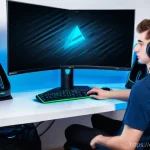
Hey there, fellow gamers! If you’ve ever felt that gut-wrenching frustration of missing an easy shot, or watching your teammates clutch rounds while you’re still working on hitting a barn door, trust me, I’ve been exactly where you are.
After years of grinding through countless FPS titles, from the tactical depths of Valorant to the adrenaline-pumping chaos of Call of Duty, I’ve learned that truly great aim isn’t some mythical talent – it’s a skill you can absolutely master with the right approach and a few clever insights.
The competitive scene is tougher than ever, and staying ahead means more than just having good reflexes; it’s about optimizing your muscle memory, understanding your setup, and applying techniques that pro players swear by.
I’ve personally experimented with countless methods, tweaking everything from sensitivity to grip style, and I’m super excited to share what actually works to give you that undeniable edge.
Forget those generic tips you’ve heard a thousand times; I’m here to dive into the real secrets that will truly elevate your game. Let’s get you hitting those headshots consistently!
Unlocking Your Perfect Sensitivity Sweet Spot
Finding Your Goldilocks Zone
Man, I can’t tell you how many times I’ve fiddled with my sensitivity settings, feeling like I was constantly chasing some mythical “pro player” number.
It’s easy to get caught up in what others are using, but what works for Shroud or s1mple might completely throw your own game off. My biggest breakthrough came when I stopped trying to replicate others and started listening to what felt natural for *me*.
You see, your sensitivity isn’t just a number; it’s the direct link between your physical movements and what happens on screen. Too high, and you’re flailing around, overshooting targets like crazy.
Too low, and you’re struggling to track fast-moving enemies, feeling like you’re trying to push a brick wall. The trick is finding that goldilocks zone where your muscle memory can truly take over, allowing for both precise micro-adjustments and quick turns.
I remember a particularly frustrating week in Valorant where I kept missing easy headshots, only to realize my eDPI was way too high for my mousepad size.
Dropping it by a significant margin suddenly made those flick shots feel achievable, not just lucky. It’s all about experimentation, but with a purpose.
Don’t just randomly change it; make small, incremental adjustments and play a few deathmatches to really feel the difference. Trust me, your wrists and your kill-death ratio will thank you.
The 360-Degree Rule: A Starting Point
So, how do you even begin? A popular starting point I’ve personally found incredibly useful is the “360-degree rule.” This isn’t a hard and fast law, but a great guide.
The idea is to find a sensitivity where a full swipe across your mousepad (from one edge to the other) results in roughly a 360-degree turn in-game. For some, this might feel too low initially, but it provides a consistent, repeatable motion that builds foundational muscle memory.
For myself, I’ve got a pretty standard-sized mousepad, and going from edge to edge and getting a full turn feels incredibly natural, allowing me to engage targets behind me without lifting my mouse too much.
Once you have this baseline, you can then fine-tune it. Adjust your in-game sensitivity up or down by small increments (0.05 or 0.1, for example) and really pay attention to how your crosshair moves.
Does it feel smooth? Are you easily correcting your aim? Are you overshooting or undershooting?
This methodical approach, rather than just guessing, is what truly locks in that optimal setting. It’s about building a solid foundation, piece by piece, that you can rely on under pressure.
The Unsung Hero: Ergonomics and Your Setup
Your Body’s Best Friend: Proper Posture
Okay, let’s talk about something that most people totally overlook: how you’re actually sitting. When I first got into competitive gaming, I was a total slouch, slumped over my desk like a question mark.
My back ached, my wrist felt stiff, and my aim was wildly inconsistent. It wasn’t until a friend, who’s a physical therapist, pointed out how detrimental my posture was that I even started thinking about it.
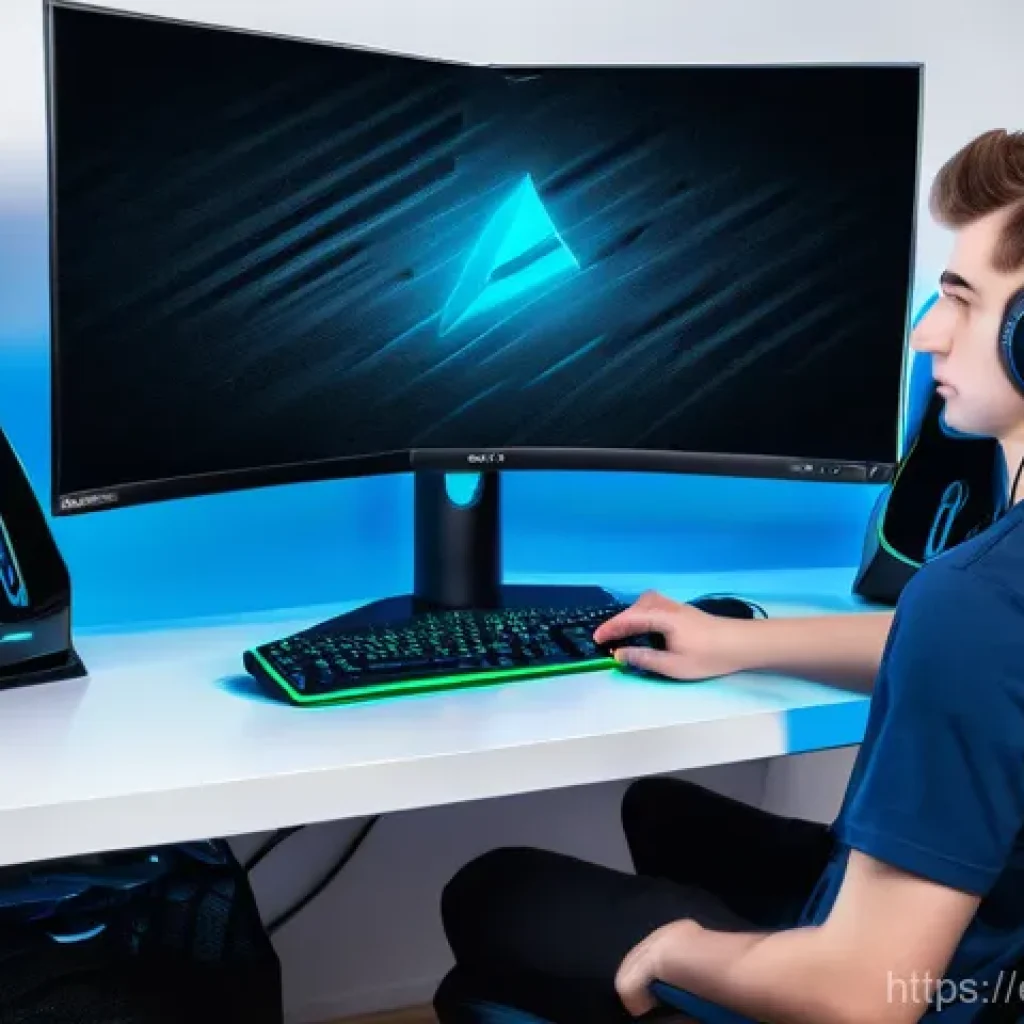
Changing how I sat felt awkward at first, almost like learning to walk again, but the improvements in my comfort and consistency were undeniable. Sitting upright, with your feet flat on the floor, forearms parallel to the ground, and your monitor at eye level – it sounds simple, but it makes a world of difference.
This isn’t just about avoiding back pain; it’s about giving your arms and wrists the stability they need for those pixel-perfect adjustments. A stable base means stable aim, period.
If you’re constantly shifting or your back is screaming, your focus isn’t on the game; it’s on your discomfort, and that’s a surefire way to miss shots.
I genuinely believe that investing in a decent chair and taking the time to set up your desk correctly is just as important as having a good mouse.
The Workspace Blueprint: Mousepad, Desk Height, and Monitor Placement
Beyond just your chair, the entire ecosystem of your desk matters. I used to think any old mousepad would do, but after trying a few different surfaces, I realized how much a good, consistent glide surface affects my tracking.
A large mousepad is an absolute must-have if you’re using a low sensitivity; you need that room to maneuver without running off the edge mid-fight. And don’t even get me started on desk height.
If your desk is too high or too low, your arm isn’t in a natural, relaxed position, leading to tension and less precise movements. You want your elbow to be at roughly a 90-degree angle when your forearm is parallel to the ground.
Lastly, your monitor placement: centering it and having it at an arm’s length distance prevents neck strain and ensures your crosshair is always at the focal point of your vision.
It sounds like a lot of little things, but trust me, these small tweaks add up to a massive difference in how comfortable and effective you feel during long gaming sessions.
When your body is happy, your aim is happy, and your ability to perform under pressure skyrockets.
Beyond Reflexes: The Power of Pre-Aiming and Crosshair Placement
Anticipation is Your Best Friend
Alright, let’s be real: raw reflexes are great, but they’re not everything. I learned this the hard way in countless clutch situations where I *knew* an enemy was coming, but still reacted too late.
The real pros aren’t just faster; they anticipate. This is where pre-aiming comes into play, and it’s a game-changer I wish I’d focused on earlier. Instead of waiting for an enemy to pop out and then reacting, you should constantly be placing your crosshair where you expect an enemy to appear.
Think about common angles, peeking spots, and pathways. If you’re holding a corner, don’t just stare at the wall; align your crosshair at head height where an enemy would likely emerge.
When I started consciously practicing this, my reaction time felt like it magically improved, but really, I was just cutting out the “react and move” step.
My crosshair was already there, ready to fire. It takes time to develop this map knowledge and predictive ability, but it’s probably the single biggest difference-maker between good players and truly great ones.
It’s like having a superpower that lets you see a split second into the future.
Head-Height and Corner Discipline
This goes hand-in-hand with pre-aiming: always, and I mean *always*, aim at head height. It sounds ridiculously simple, but under pressure, it’s easy to let your crosshair drop to the chest or even the feet.
The fastest time-to-kill in almost any FPS comes from headshots, so why aim anywhere else? I spent too many hours in deathmatches just spraying, getting body shots, and wondering why I wasn’t winning more engagements.
Once I forced myself to consciously keep my crosshair at head level, even if it felt awkward at first, my accuracy soared. The second part of this is “corner discipline.” When you’re approaching a corner, don’t hug the wall; give yourself a little space.
This is called “slicing the pie” or “angle advantage.” By staying slightly off the corner, you see the enemy before they see you, giving you a crucial fraction of a second to react.
This small tactical adjustment, combined with consistent head-height aiming, has genuinely transformed my entry fragging ability. It’s the difference between blindly walking into danger and confidently clearing a room.
Mastering Your Mouse Grip: Small Change, Big Impact
Claw, Palm, or Fingertip: What’s Your Style?
You wouldn’t believe how much your mouse grip affects your aim until you really pay attention to it. For years, I just gripped my mouse however it felt “natural,” without really understanding the nuances.
Turns out, there are three main types – claw, palm, and fingertip – and each has its own strengths and weaknesses. A palm grip, where your entire hand rests on the mouse, offers great stability for tracking but might limit quick, precise wrist movements.
Then there’s the claw grip, which is what I personally gravitated towards. My palm rests lightly on the back, but my fingers are arched, giving me incredible control for micro-adjustments with my fingertips and wrist.
It felt a bit crampy initially, but once I adapted, my flick shots became much snappier. And finally, the fingertip grip, where only your fingertips touch the mouse, offering maximum agility but requiring a lot of control.
I’ve tried all three, and I’ve noticed that switching up my grip even slightly can drastically change my comfort and accuracy. It’s worth experimenting, really diving into how your hand interacts with your mouse, and finding the grip that gives you the best balance of stability and dexterity for *your* playstyle.
The Subtle Art of Pressure and Comfort
Beyond just the type of grip, it’s also about how much pressure you’re applying. I used to white-knuckle my mouse during intense moments, my hand practically fusing with the plastic.
The result? Tremors, fatigue, and completely wild aim. It felt like I was trying to steer a race car with a death grip on the wheel.
The moment I learned to relax my grip, to hold the mouse firmly but without crushing it, my aim became so much smoother and more controlled. It’s a subtle change, but it’s profound.
Think of it like holding a bird – you want to hold it firmly enough so it doesn’t fly away, but not so tightly that you hurt it. This relaxed grip allows for better blood flow, reduces strain, and, critically, improves your fine motor control.
Plus, considering the countless hours we spend holding our mice, comfort is king. If your hand is cramping or feeling strained after a few rounds, you’re not going to perform at your best, and your long-term gaming health will suffer.
Take a moment to really feel your grip, reduce unnecessary tension, and see the difference it makes.
| Aiming Skill | Common Mistake | Pro Tip / How to Improve |
|---|---|---|
| Tracking | Jerky movements, overshooting/undershooting targets. | Practice consistent, smooth circular motions in aim trainers. Focus on keeping your crosshair locked onto a moving target’s center. |
| Flick Shots | Inaccurate flicks, inconsistent stopping power. | Develop strong muscle memory for common distances. Use a low sensitivity and ensure a large mousepad for full range of motion. |
| Crosshair Placement | Aiming at the ground or body height, reactive aiming. | Consciously keep your crosshair at head height and predict enemy positions. Learn common angles on every map. |
| Recoil Control | Spraying wildly without adjusting. | Learn individual weapon spray patterns in practice range. Practice pulling down and compensating in mirror patterns. |
| Target Acquisition | Slow to pick up new targets after a kill. | Practice multi-target drills in aim trainers. Focus on quickly identifying and snapping to the next threat. |
Practice Smarter, Not Harder: Effective Training Routines
Beyond Just Deathmatch: Aim Trainers and Drills
For too long, my “practice routine” consisted of just hopping into a deathmatch and hoping for the best. While deathmatch has its place for warming up and getting a feel for gunfights, it’s not the most efficient way to isolate and improve specific aim skills.
That’s where dedicated aim trainers like Aim Lab or KovaaK’s come in, and let me tell you, they were an absolute revelation for me. These tools allow you to hyper-focus on specific aspects of your aim – whether it’s tracking, flicking, target switching, or reaction time.
I personally saw massive improvements in my tracking after just a week of consistently doing specific tracking scenarios in Aim Lab. It’s not about mindlessly grinding for hours; it’s about targeted, deliberate practice.
Think of it like a gym for your mouse hand. You wouldn’t just randomly lift weights; you’d follow a program. The same applies to aim.
Find a routine that targets your weaknesses and stick to it. Consistency, even for just 15-20 minutes a day, will yield far better results than sporadic, long sessions.
The Warm-Up That Actually Works
Ever jump into a ranked game cold and immediately feel off? Yeah, I’ve been there, and it almost always leads to a rough start. A proper warm-up isn’t just about getting your blood flowing; it’s about getting your muscle memory primed and your mind focused.
My go-to warm-up now involves a quick 5-10 minutes in an aim trainer, focusing on general aim tasks like reflex shots and tracking, followed by about 10-15 minutes in my game’s deathmatch mode.
During the deathmatch, I’m not just going for kills; I’m actively focusing on crosshair placement, bursting instead of spraying, and practicing peeking mechanics.
The goal isn’t necessarily to top the scoreboard, but to get comfortable, get my aim dialed in, and shake off any stiffness. This two-pronged approach ensures both raw aim mechanics and in-game movement are ready.
Skipping this step is like trying to run a marathon without stretching – you might finish, but you’re probably not going to perform your best, and you might even pull a muscle (or your mental game).
The Mental Game: Conquering Tilt and Building Confidence
Winning the Battle in Your Head
Let’s be honest, we’ve all been there: that moment when you whiff an easy shot, lose a crucial duel, or watch a teammate do something incredibly questionable.
The next thing you know, you’re spiraling, getting “tilted,” and your aim goes completely out the window. I used to let this happen all the time. One bad round would turn into three, then five, and suddenly I was throwing the entire game.
But I realized that the mental game is just as important, if not more so, than pure mechanical skill. Learning to manage tilt has been one of the biggest leaps in my personal performance.
It starts with recognizing when you’re getting frustrated. Take a deep breath, consciously remind yourself that it’s just a game, and refocus. Sometimes, a quick 30-second break, standing up, or grabbing a drink is all it takes to reset.
Don’t dwell on mistakes; acknowledge them, learn from them, and move on. Dwelling only makes them bigger in your head and further degrades your performance.
Building Unshakeable Confidence
Confidence isn’t just for pro athletes; it’s crucial for gamers too. When you’re confident, you take more decisive peeks, you trust your aim, and you play more aggressively when appropriate.
But how do you build it? For me, it came from consistent, smart practice and celebrating small wins. Every time I hit a nice flick in an aim trainer, or clutched a round in a competitive match, I’d acknowledge it.
It sounds a bit silly, but those little positive reinforcements build up. Also, watching your own gameplay, even the bad stuff, helps. I’ve often reviewed my VODs and realized that my aim wasn’t as bad as I thought it was in the heat of the moment.
Seeing the good plays and understanding the mistakes objectively rather than emotionally helps foster a more positive self-image. Don’t compare yourself to others; compare yourself to who you were yesterday.
Focus on your own progress, and that confidence will naturally start to blossom, leading to more consistent, clutch performances.
Gear Up Right: What Peripherals Truly Matter
The Mouse That Fits Like a Glove
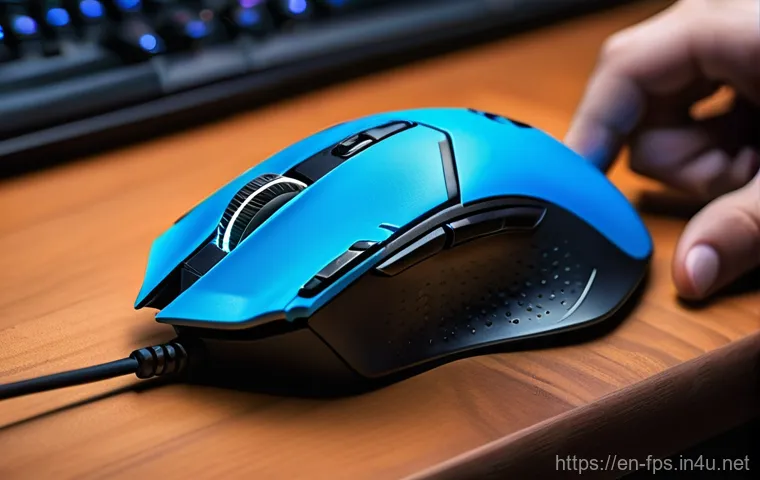
Okay, let’s talk about the tool of the trade: your mouse. This isn’t about spending a fortune, but about finding what works for *your* hand and *your* grip.
I’ve gone through so many mice over the years, chasing the “best” sensor or the lightest weight, only to realize that comfort and shape are paramount.
A mouse that feels good in your hand, one that you can confidently grip for hours without strain, is infinitely better than one with fancy specs that feels awkward.
Pay attention to the shape, the weight distribution, and the button placement. Do the side buttons feel natural to press? Is it too big or too small for your hand?
I personally prefer a medium-sized, symmetrical mouse with a slight hump for my claw grip, but your mileage may vary. Don’t be afraid to try a few out, even if it means borrowing a friend’s for a few rounds.
A good mouse is an extension of your arm, and finding the right one can genuinely feel like unlocking a new level of control.
The Unsung Hero: Your Monitor and Refresh Rate
While your mouse and mousepad get a lot of attention, your monitor is often overlooked, but it’s crucial. I vividly remember making the jump from a standard 60Hz monitor to a 144Hz one, and it felt like I was seeing the game for the first time.
The smoothness, the clarity, the reduced input lag – it was like someone wiped fog off my screen. Everything just felt snappier and more responsive, making tracking enemies significantly easier.
If you’re serious about competitive FPS, a high refresh rate monitor (144Hz, 240Hz, or even 360Hz if your rig can push the frames) is not a luxury; it’s an essential upgrade.
You literally see more frames, giving you a fractional but crucial advantage in reacting to opponents. Paired with a decent graphics card that can actually *deliver* those frames consistently, it creates an incredibly fluid experience.
Don’t underestimate the power of visual feedback; seeing clearly and reacting instantly is a huge part of top-tier aiming. It’s an investment, for sure, but one that truly pays off in every single gunfight.
Wrapping Things Up
Whew! We’ve covered a lot of ground today, haven’t we? From finding that elusive sensitivity sweet spot to nailing your crosshair placement and taming your mental game, it’s clear that becoming a sharpshooter isn’t just about raw talent. It’s a journey of continuous learning, tweaking, and most importantly, enjoying the process. I’ve personally found that every small adjustment, every deliberate practice session, and every moment of self-reflection adds up to something truly significant. So, keep experimenting, keep pushing, and remember that every pro started exactly where you are now – with a desire to get better. Your perfect aim is within reach, I promise!
Useful Information to Know
1. Don’t underestimate the power of regular breaks! Seriously, step away from your screen every hour or so. Even a five-minute stretch can dramatically reduce fatigue and keep your focus sharp for longer sessions. Your eyes, wrists, and mind will thank you.
2. Hydration and light snacks are your secret weapons. You wouldn’t run a marathon without fuel, and gaming is no different. Keep water close by and consider healthy snacks to maintain energy levels and mental clarity, avoiding that mid-session slump.
3. VOD review isn’t just for the pros. Recording and watching your own gameplay, even your losses, can be a game-changer. You’ll spot mistakes you didn’t even realize you were making and reinforce good habits. It’s tough love, but it works!
4. Connect with other gamers. Seriously, finding a community or a few friends to play with can make the entire experience more enjoyable and less frustrating. Shared tips, support during tough matches, and just having fun together can boost your morale and motivation.
5. Never be afraid to adjust your settings. While consistency is key for muscle memory, if something feels genuinely off after consistent practice, make small, incremental changes. Your setup and even your body can change over time, so your sensitivity might need to as well.
Key Takeaways
Achieving peak aiming performance is a holistic endeavor, blending mechanical skill with mental fortitude and an optimized environment. Your sensitivity is deeply personal; finding that “Goldilocks zone” through methodical testing, like the 360-degree rule, is crucial for building muscle memory. Ergonomics play an unsung hero role, with proper posture, desk height, and monitor placement forming the stable foundation for consistent aim and preventing strain during long sessions. Remember, anticipation trumps pure reaction; practicing pre-aiming and maintaining head-height crosshair placement will put you ahead of the curve. Your mouse grip also significantly impacts control and comfort, so experiment with palm, claw, or fingertip styles to find what truly clicks for you. Don’t just deathmatch; smart practice with aim trainers and structured warm-ups will target specific weaknesses for faster improvement. Finally, don’t neglect the mental game; learning to manage tilt, build confidence through small victories, and review your gameplay objectively are just as vital as any physical skill. Investing in high refresh rate monitors is also a non-negotiable for competitive play, offering smoother visuals, reduced input lag, and a significant competitive edge by providing clearer visuals and more precise control over character movements. By addressing all these elements—your physical setup, mental state, and deliberate practice—you’ll unlock your true potential and dominate the battlefield like never before.
Frequently Asked Questions (FAQ) 📖
Q: How do I find my ‘perfect’ mouse sensitivity? It feels like I’m always tweaking it!
A: Oh man, the sensitivity rabbit hole! I’ve been there, endlessly adjusting, feeling like I’m chasing a ghost. What I’ve found, after countless hours in aim trainers and actual matches, is that there isn’t one magical ‘perfect’ sensitivity for everyone.
It’s deeply personal. Think of it less like a number you find, and more like a feeling you develop. Start with a medium eDPI (your mouse’s DPI multiplied by your in-game sensitivity) – for most FPS games, somewhere between 400-800 eDPI is a great starting point.
From there, it’s all about subtle adjustments. If you’re overshooting targets consistently, try nudging it down slightly. Undershooting?
A tiny bump up. The real trick is to pick something, stick with it for at least a week, and build that muscle memory. Your brain needs time to adapt and truly learn the movements.
Don’t fall into the trap of changing it every other game; that just resets your progress. I personally found my sweet spot by focusing on whether I could comfortably do a 180-degree turn without lifting my mouse too much, and then fine-tuning from there until flick shots felt natural and tracking was smooth.
It’s a journey, not a destination, but consistency is your best friend here!
Q: Beyond just playing games, what are some effective ways to truly train my aim and build solid muscle memory?
A: Absolutely! Just playing games, while fun, isn’t always the most efficient way to train your aim, especially if you’re stuck in bad habits. It’s like trying to get fit just by walking to the fridge – you need dedicated workouts!
My absolute game-changer was incorporating aim trainers into my routine. Tools like Aim Lab or KovaaK’s are incredible because they isolate aiming mechanics.
Instead of waiting for opportunities in-game, you’re constantly engaged in target acquisition and tracking. I usually warm up with 15-20 minutes of specific drills – think small target flicking, precise tracking scenarios, and even some reaction time exercises.
The key isn’t just mindlessly clicking; it’s about deliberate practice. Focus on the quality of your movements, identifying where you’re missing, and actively trying to correct it.
Another thing I swear by is practicing crosshair placement in actual games. Before a match even starts, mentally commit to keeping your crosshair at head height where enemies are likely to appear.
It sounds simple, but it builds incredibly strong foundational habits that reduce the need for huge, reactive flick shots. Trust me, dedicating even a short, focused session to these techniques daily will make a colossal difference in your consistency and confidence.
Q: Is my gear really holding me back? Do I need a fancy mouse or a huge mousepad to improve my aim?
A: This is a question I get all the time, and it’s super valid! It’s easy to look at pro players with their super expensive setups and think, “I need that to be good.” The truth is, while good gear can definitely help and provide a more consistent experience, it’s rarely the primary reason you’re struggling.
Think of it this way: a professional chef can still cook an amazing meal with decent knives, but they’ll be even better with top-tier ones. For aiming, a modern gaming mouse with a reliable sensor (pretty much standard on most gaming mice these days) and a comfortable shape for your grip style is essential.
You don’t need the latest RGB-laden model, just something that tracks consistently and feels good in your hand. As for mousepads, a larger pad definitely gives you more room to maneuver, especially if you play on a lower sensitivity, which I personally prefer.
A smooth, consistent surface helps a lot with tracking. But here’s the kicker: I’ve seen absolute demons with budget setups! Your technique, muscle memory, and understanding of the game are far more impactful.
Upgrade your gear when you feel a specific limitation, not as a quick fix for bad habits. Invest in practice and solid fundamentals first, and then let your gear enhance your already great skills!